Showing posts with label Culture. Show all posts

Monday, May 26, 2025

Chinese Character -Dream 梦(夢 )

夢(Meng4),then Chinese character for "dream," is made up of four parts and is ideograph. The two upper parts, ++ and 皿,together resemble the shape of an eyebrow above the eye of a person. The middle part is interpreted as either a bed or the roof of a house;and the lower part 夕is the character Xi1,which means evening. 

As a whole, the character suggests a person going to sleep in the evening, and refers to the dreaming that then occurs.

The character 夢has two shades of meaning. One is based on its pronunciation that is similar to the character 瞢(Meng 2),which can mean having obscured vision, or being unenlightened.

In ancient writings, there is another meaning that refers to a place where the divine and humans communicate. This particular thought reveals the ancient Chinese people's understanding of multiple realities and the relationship between man and Gods.

In the modern Chinese language, the character 夢 is used as both a noun and a verb. It is combined with other characters to form words that refer to something either fantastic or unreal, and they can have both positive and negative meanings.

One example is meng4hua4(梦话), literally dream talk, which can mean a daydream or nonsense. The word meng4xiang3(梦想)means to dream of or vainly hope for something. It can also mean a fond dream or an earnest wish. The phrase meng4huan4 pao4 ying3(梦幻泡影) refers to an illusion, or a pipe dream.

To the Chinese, as with many other cultures around the world, dreams can have significant mystical or existential meanings.

They can be viewed as a communication channel with the supernatural, or they can provide deep insight into events past, or yet to come. However, in the Chinese culture, dreams are seldom disregarded.  

Wednesday, February 13, 2019

"The Wandering Earth" Hit Chinese Movie Theater

Last year, Chinese cinemas took in Rmb5.8 billion ($913 million) in ticket sales during the first seven days of the Chinese New Year holiday – the most ever in a single week.

Comedies are traditionally the biggest crowd-pleasers during the holiday, but sci-fi could secure a greater share of ticket sales this time round. That’s because this Chinese New Year week sees two sci-fi blockbusters hitting the big screen. Admittedly, one is a sci-fi comedy – filmmaker Ning Hao’s Crazy Aliens, starring actor Huang Bo. The other is The Wandering Earth, which many in the foreign press have hailed as the first proper sci-fi film made in China.
Both movies are adapted from stories by Liu Cixin, the first author from Asia to win best novel at the Hugo sci-fi and fantasy literary awards.

Information Times felt the need to clarify the claims of a ’first’, however. “The Wandering Earth is definitely not the first sci-fi movie China has ever made, but it is the first sci-fi film that’s garnered so much attention in China.”

Read more >>

Wednesday, September 23, 2015

Exhibition on China and Fashion Attract 0.7 Millions

“中国:镜花水月"Damon Winter/The New York Times
A dress by Guo Pei at the “China: Through the Looking Glass” exhibit.

The talk of Wall Street over the last week may have been Shanghai’s plunging stock market, but many blocks farther uptown, where commuter traffic gives way to verdant sidewalks, a different set of numbers related to China was making news. As it entered its final week, the Metropolitan Museum of Art’s spring Costume Institute show, “China: Through the Looking Glass,” was attaining blockbuster status.

As of last Friday morning, 735,000 people had attended the show, with a week to go before its close on Sept. 7, including a final Friday and Saturday with viewing hours extended until midnight. That has already made it the most-visited Costume Institute show in the museum’s history, displacing “Alexander McQueen: Savage Beauty,” which pulled in 661,509 attendees, as well as elevating it to No. 7 — and climbing — on the museum’s top-10 most popular list, on a par with other 700,000-plus-visitor shows such as the “Mona Lisa” (1963), “Origins of Impressionism” (1995) and “Picasso in the Metropolitan Museum of Art” (2010).

Andrew Bolton, curator at the Costume Institute and the man behind the show, said there have been more positive responses left in the visitor’s comment box than ever before. (“Usually people use it as an opportunity to vent displeasure,” he said. “Often at the lighting, or the signage.”)

By any objective measure, this will be the most successful fashion show the Met has ever had. The question is: Why?

“Honestly, it totally surprised me,” Mr. Bolton said. “I was prepared for it to be polarizing. We were predicting around 500,000 visitors. I never expected this level of response. ”

“No one expected it would surpass McQueen,” said Maxwell K. Hearn, the Douglas Dillon chairman of the department of Asian art, and Mr. Bolton’s collaborator on the exhibition, which is in the Asian art galleries on the second floor, some Egyptian galleries on the first floor and the Anna Wintour Costume Center on ground level.


A visitor photographs a Dior dress by John Galliano at the Met exhibition.
/Damon Winter/The New York Times

A visitor photographs a Dior dress by John Galliano at the Met exhibition.

I didn’t expect it, either. Not because I didn’t like the show (it’s visually engrossing in its mix of luxury, whimsy and point) but because it doesn’t have the single iconic hook that can transform a purportedly high culture meditation into an extended pop culture moment.

After all, it isn’t, as Mr. Bolton said, immediately obvious from the name what the show is about. (Answer: the way a received fantasy version of China engages the imaginations of Western designers.) And the subject itself was ripe for criticism from those who thought the approach played to a now-discredited stereotype of the East. You can’t attribute it to the sheer size of the exhibition, the largest ever, or it’s length, because size does not equate to allure.

There wasn’t the sort of human gossip element that helped drive interest in the McQueen show, held a year after the designer’s suicide and days after Kate Middleton married Prince William in a dress by Sarah Burton for Alexander McQueen.

There was, to be fair, lots of striking use of mixed media, which made it seem both very contemporary as well as historic. And it included film — Wong Kar-wai, who wrote and directed “In the Mood for Love,” was the exhibit’s art director, and clips from movies like “The Last Emperor” and “The World of Suzie Wong” abound — always a popular medium.

But Mr. Wong is an independent director as opposed to a household name, and when Baz Luhrmann, a much more recognizable Hollywood figure, was the creative consultant on an earlier Costume Institute show, 2012’s “Schiaparelli and Prada: Impossible Conversations,” it wasn’t nearly the same hot ticket.

When I first saw the show in May, I was struck by the facile nature of the fashion when juxtaposed against the antiquities. No matter the clothes’ beauty — I remember the runway impact of Tom Ford’s pagoda collection for Yves Saint Laurent and being amazed by the broken blue and white china shards of porcelain on an Alexander McQueen bodice — they pale when compared with the source of the inspiration, in part because the latter has a creative integrity the former only borrows. Often too literally. Please go to The New York Times read more about this story.

Friday, April 10, 2015

At Pearl River, Four Decades of Helping New Arrivals From Asia

Every morning, Ming Yi Chen walks down to the basement of Pearl River Mart, the Chinese department store he opened in 1971, and burns incense. Then he walks back to the first floor to light more incense. He breathes in the sandalwood, to him a calming scent. And the day can begin.

With the news this week that Pearl River Mart, at 477 Broadway in SoHo, would close in December because of a significant rent increase and an unsustainable business model, it became clear that Mr. Chen’s routine — and those of his 40 employees — would soon disappear into the capitalist cloud.

“There are people waiting for this space,” Mr. Chen, 76, said from the tea balcony, overlooking a floor that stretches from Broadway to Mercer Street, 30,000 square feet in all. “Maybe H & M, one of those big chains — with big pockets.”

It is fair to say that those big-pocketed stores do not offer the soundtrack of traditional Chinese music and tweeting birds, nor do they display lanterns, gongs and 60-foot-long paper dragons amid waterfalls. From the soy sauce and Chinese underwear that were lifelines for homesick Chinese immigrants to the slippers and qipao dresses that became staples for New York fashionistas, Pearl River Mart tells a lesser-known tale that is more than the sum of its dry goods.

Run with a strong, nurturing hand by Mr. Chen’s wife, Ching Yeh Chen, 68, Pearl River has provided a life for its immigrant workers for four decades. It has been a welcome alternative to restaurant and supermarket jobs for new immigrants, a place where Cantonese and Mandarin were spoken and employee banquets were held every year. The store, overseen by a board of trustees and 30 shareholders, has helped some workers apply for green cards, once had a matching 401(k) plan and still offers health insurance.

“We are probably one of the few pioneer companies that does that in Chinatown — I’m proud to say that,” Mrs. Chen, the president, said of the insurance plan. “Most of Chinatown, everything is in cash. In that sense, we are pretty fair, and people will stay here long enough.” (The store has been in four locations, including Canal Street.)

Often, two generations have worked side by side, and some employees have turned a job stocking shelves into a lifelong career.

“I’ve been with the Chens since I immigrated to the United States, as a part-time worker,” Wilkie Wong, 50, said. He had just arrived from Burma in 1982 and was attending Seward Park High School on the Lower East Side. Mrs. Chen knew a school counselor and asked her for part-time employees. Mr. Wong showed up with two of his classmates; now he is the company’s vice president.
Asked about the store’s closing, Mr. Wong said, “I have mixed feelings.” He just got an office with a window two years ago, he explained. A graduate of the State University of New York at Buffalo with a degree in economics and international trade, he had been doing the accounting in a separate basement office on Wooster Street.

But the future concerns him. Mrs. Chen said she would like to move to smaller quarters, downsize the inventory and, to better compete with Amazon, boost the online business, which Mr. Wong directs. “If we continue, he’s still with us,” she said.

But Mr. Wong’s 16-year-old son will not be joining him. “As an immigrant to the United States, it’s the same as my parents and every parent who wants their kids to have a high education, be a lawyer, doctor,” Mr. Wong said. “Even though I enjoy working here, I want him to have better than what I had.”

For some longtime employees, it might be time to move on. Lapyan Ng, 63, from Hong Kong, has worked at Pearl River for over 20 years. “Maybe I need to retire and take care of my granddaughter,”   >>

Sunday, April 05, 2015

Not Loving It

Salon magazine asked this month whether McDonald’s has developed a “self-hating complex” in China. The reason for its question was the local translation of its slogan – “I’m lovin’ it”.

The Chinese version is Wo jiu xihuan which, as Salon points out, can have pretty negative connotations because the second character in the phrase is used to contradict something emphatically. “The natural implication is that the speaker is responding to someone who has just insulted McDonald’s food,” writes Salon. “While there is no perfect translation for the phrase, it has the same essential spirit as ‘I like it no matter what you say!’”

Hence you might use the phrase in a defensive retort when someone asks: “Why do you eat that garbage?” Salon went to the experts to confirm its analysis and Professor Liu Lening, head of Columbia University’s Chinese language programme, said the publication’s interpretation was correct. He advised that a better translation of ‘I’m lovin’ it’ would have been Wo hen xihua and also suggested Wo hao xihuan, which means “I really like it”.

Thursday, April 02, 2015

Chocoholics? Ferrero to Open First Chocolate Plant in China

The first record of chocolate in China is from the court of the Kangxi Emperor in 1706. A papal legate by the name of Charles-Thomas Maillard De Tournon brought some with him in order to charm the Chinese monarch. Unfortunately the cocoa-based product, which at that time was served as a drink, failed to impress. One account of the imperial tasting holds that Kangxi took a sip and declared he would much rather have a cup of longjing tea (a specialty from Hangzhou in Zhejiang province).

Three hundred years later and there are still many Chinese who would agree with Kangxi. The sweet, creamy taste  and texture of chocolate – now mainly consumed in solid form – is too rich for many Chinese who grew up with little or no dairy in their lives.

But that is changing rapidly. The Chinese confectionary market is growing between 10% to 20% annually, depending on who you ask, and the big players are all jostling for sales.

Cue another Italian from Piedmont – Giovanni Ferrero, the head of the family-run business that produces Nutella and the gold-wrapped Ferrero Rocher balls. He sees Asia as the main source of his candy company’s growth in the coming years and this summer he will open a Rmb5 billion ($800 million) factory in Zhejiang, reports China Business Journal.

In 2013 the notoriously private CEO told the Wall Street Journal that “the strength of the Rocher brand [in Asia] is an early indicator of the route to follow”.

Four companies currently dominate the Chinese chocolate market – Mars, Nestle, Ferrero and local brand Le Conté. Mars, which has the biggest market share, has two factories in China, producing Snickers and Dove bars, and M&Ms. Mars also makes a locally available rice-infused chocolate called Cui Xiang Mi.

Hershey’s, the world’s fifth largest chocolate maker, has also launched a major offensive: buying Shanghai candy maker Golden Monkey last year and opening a research centre in the city in 2013.

The feeling is that urbanisation, rising wealth and an increasing interest in non-Chinese foods will keep the market growing. Annual Chinese chocolate consumption is currently only 200 grams a year per person. If the average Chinese were to consume even a quarter of the 11kg of chocolate the British munch annually, it would result in more than $20 billion in additional sales for the confectionary industry.

Last month Hershey’s predicted the Chinese market as a whole would be worth $3.4 billion by 2019, up from $2.7 billion today (the global chocolate market will next year grow to $98 billion according to research by the consultancy Markets and Markets).

Ferrero, which had revenues of $8.7 billion last year, is the only one of the major players not to have some kind of Chinese facility.

This, however, is very characteristic of the privately-held company which began life as a pastry shop in Alba. In the years following the Second World War, Giovanni’s grandfather Pietro began mixing cocoa with ground up hazelnut. The result was a solid, chocolatey block. His son Michele – who died last month at the age of 89 –  then came up with the idea of mixing it with vegetable oil to make it spreadable. As Nutella sales surged, an empire was born.

Michele insisted on growing the company naturally and resisted making any acquisitions bar one – a small hazelnut company in Turkey. His son Giovanni, who has been running the company since 1997 shares his father’s business philosophies.

“We’re not interested in maximising revenue in the short term, like everyone else. If we were listed, we would be under short-term pressure to deliver dividends and profits,” the WSJ quoted him as saying in 2013. Indeed, while other multinationals have moved production away from China recently, Ferrero’s long-term mindset has led him to make a major investment instead.

In the short term it may hurt its margins in China. That’s because some Chinese have been heard to moan about the price of imported Ferrero Rocher chocolates. As the Beijing Commercial Daily pointed out, after Ferrero opens its 30,000 tonne a year plant it will be harder for the company to justify the price tag for the locally-made versions. “Ferrero’s price has always been higher than other brands, but Chinese customers won’t accept this once the company reduces their transportation cost.” >>

Friday, March 27, 2015

Disney’s Cinderella Tale Woos China’s Grown-up Audience

Charles Perrault’s folk tale about Cinderella was written around the seventeenth century. But a Chinese legend bearing a striking resemblance to its plot seems to have appeared in the Tang Dynasty, almost a millennium earlier.

It is the story of a very bright girl named Ye Xian. Not only is she beautiful she also has a very kind heart. But her father dies so she is forced to live with her stepmother. One day when drawing water Ye catches a fish with red fins and golden eyes. She takes the fish home and places it in the pond, taking every scrap of food she can find to feed the fish.
Unfortunately her stepmother snatches and kills (then eats) the fish while Ye is out running errands.

When Ye discovers her fish is gone she becomes terribly upset. A little old man (the fairy god father?) magically appears and instructs her to retrieve the fish bones, put them in a bowl in her room and it will grant any wish she wants.

One day, during the annual festival for young maidens to meet potential husbands, her stepmother and stepsister set off for the dating fair. Ye wants to go too and prays to her fish bones. Suddenly Ye finds herself clad in the most beautiful green silk robe with jade and other fine jewellery adorning her. More importantly, she is also given a pair of gold embroidered slippers.

In her new outfit, Ye rushes to join the celebrations. She is so beautiful that men and women – including her stepmother and stepsister – start wondering who she is. Worried that her identity could be compromised, Ye runs back home but leaves one of her slippers. The Emperor later finds the slipper and becomes determined to find its owner… (Presumably, you can predict the ending.)
That helps explain why many Chinese are familiar with the Cinderella story – even if they didn’t grow up watching the famed Disney cartoon. And last week, Disney’s live-action film Cinderella became the biggest box office winner, taking in over Rmb200 million ($32 million) during its opening weekend. >>

Tuesday, December 16, 2014

Who's Winning China's Chocolate War?

M&M as Terracotta Warrior Credit: FITCH
At the new M&M's World chocolate megastore in Shanghai, the decor is a tribute to Chinese culture. There's a Great Wall of Chocolate and a massive M&M statue wearing the armor of a Terracotta Warrior. Chen JieTing, 20, posed for photos with an M&M wearing Bruce Lee's yellow jumpsuit. "I love M&Ms -- not too sweet and so cute," she said.

Chinese consumers traditionally prefer salty snacks, but the world's chocolate makers have been making converts -- and competing fiercely for market share -- in the high-stakes market that's home to 1.37 billion people. The local chocolate market has been growing 12% annually, according to Euromonitor International. China's embrace of chocolate has helped push up cocoa prices and contributed to fears of an international shortage. (Mars Inc., the maker of M&Ms. has warned the industry will need 1 million more metric tons by 2020 and is working on sustainable farming to boost yield.)


Meanwhile, Western brands have upped the ante in China by building factories and innovation centers, launching flashy campaigns, buying local chocolate makers and creating retail experiences like the M&M's store, which opened in August.


Mars, which also makes Snickers, has come out ahead, with a projected 39% of the Chinese market in 2014, according to Euromonitor. Its biggest hit is the Dove brand, which accounts for a whopping 34% of national chocolate consumption.

After the era of Chairman Mao Zedong, "when China's doors opened in 1979, you really had a billion people who had never tasted chocolate," said Lawrence Allen, a former Hershey and Nestlé executive in China. "It was a virgin market."

Companies rushed in and learned by trial and error -- Mars tried first with M&Ms. he said, but Dove was what took off. Hersheys had a hit with bite-size Kisses while others were selling 60- or even 80-gram bars, because "Chinese people do not sit down and eat 60 grams of chocolate at a time," said Mr. Allen, author of "Chocolate Fortunes: The Battle for the Hearts, Minds, and Wallets of China's Consumers."

There were cultural differences too. China traditionally classifies foods as "heating" and "cooling," concepts not about temperature but about the effect on the body. Chocolate is a heating food, so it's ill-advised for summer.

Read more at Adage.

Wednesday, December 03, 2014

Chinese Smartphone Brands Push Into U.S.

A host of Chinese smartphones have big ambitions for the U.S. -- but don't expect a flood of marketing from them.

Just a few weeks ago, research firm IDC declared that Xiaomi, a four-year-old Beijing company, had stormed to third in the worldwide smartphone market based on units shipped. Only a day later, it was leapfrogged when Lenovo completed its Motorola acquisition. These companies now aim to replicate industry leader Samsung's rise, parlaying success at home to go global.

Realizing this goal, however, could be an expensive marketing proposition for brands that are obscure outside of China. U.S. carriers are reluctant to carry the political risk (and marketing weight) of selling Chinese devices. That puts the onus on the smartphone brands themselves.

"Chinese brands don't do a great job of brand building," said Ben Bajarin, an analyst with Creative Strategies. "The cost to invest and build a brand in the U.S. seems a bit too daunting for them."

Daunting but tempting. Western markets still hold the industry's best margins -- and its prestige. "To be a truly global brand, you have to be in the U.S.," said Lawrence Lundy, a Frost & Sullivan analyst. He expects that some Chinese brands will follow Samsung's strategy of investing broadly in media; others will attempt to sell devices without spending big, like Apple. Here's what to expect from the top five. >>

Tuesday, December 02, 2014

A Map of Betrayal, An Ambivalent Double Agent, Torn Between Two Countries

When the Chinese writer Ha Jin came to the U.S. in 1985, he was only planning to stay long enough to finish his graduate degree. After that, he thought, he'd return home and teach English.

But a series of events shocked him into staying permanently, starting with the capture and trial of a Chinese spy named Larry Chin. Chin spent decades infiltrating the CIA, but swore at his trial that he was trying to improve the relations between the two countries.

Larry Chin "claimed that he was basically serving both countries. He used the metaphor 'mother and father' ... really, he was torn by the two countries," Ha Jin tells NPR's Arun Rath.

In 1989, the Tiananmen Square massacre took place. Ha Jin soon decided to settle permanently in America.

In the decades years since, his novels and stories have won him international acclaim and a National Book Award.

His newest novel, A Map Of Betrayal, describes the life of a spy who is deeply ambivalent about spying on America, a country he loves as much as China. There are unmistakable echoes of Larry Chin — and, Ha Jin tells Rath, of the novelist's own experiences.

Please read/listen the interview highlights with Hajin at NPR.

Wednesday, November 26, 2014

Kissing Your Socks Goodbye

By her own account, Marie Kondo was an unusual child, poring over lifestyle magazines to glean organizing techniques and then stealthily practicing them at home and school, confounding her family and bemusing her teachers.

As she writes in “The Life-Changing Magic of Tidying Up: The Japanese Art of Decluttering and Organizing,” which comes out this month in the United States and is already a best seller in her native Japan and in Europe, she habitually sneaked into her siblings’ rooms to throw away their unused toys and clothes and ducked out of recess to organize her classroom’s bookshelves and mop closet, grumbling about poor storage methodologies and pining for an S-hook.

Now 30, Ms. Kondo is a celebrity of sorts at home, the subject of a TV movie, with a three-month waiting list for her decluttering services — until recently, that is, because she has stopped taking clients to focus on training others in her methods. Last Friday, I brought her book home to practice them.

What better moment to drill down and ponder the fretful contents of one’s sock drawer? Global and national news was careering from the merely hysterical to the nonsensical (the Ebola cruise ship incident was just peaking). Closer to home, other anxieties beckoned. But in my apartment on Second Avenue, the world was no larger than my closet, and I was talking to my T-shirts.

Let me explain. Ms. Kondo’s decluttering theories are unique, and can be reduced to two basic tenets: Discard everything that does not “spark joy,” after thanking the objects that are getting the heave-ho for their service; and do not buy organizing equipment — your home already has all the storage you need.

Obsessive, gently self-mocking and tender toward the life cycle of, say, a pair of socks, Ms. Kondo delivers her tidy manifesto like a kind of Zen nanny, both hortatory and animistic.

“Don’t just open up your closet and decide after a cursory glance that everything in it gives you a thrill,” she writes. “You must take each outfit in your hand.”
“Does it spark joy?” would seem to set the bar awfully high for a T-shirt or a pair of jeans, but it turns out to be a more efficacious sorting mechanism than the old saws: Is it out of style? Have you worn it in the last year? Does it still fit?
 ...
The contents of one of Ms. Kondo’s own drawers.
You can find YouTube videos of her technique, but it’s not so hard: Fold everything into a long rectangle, then fold that in upon itself to make a smaller rectangle, and then roll that up into a tube, like a sushi roll. Set these upright in your drawers. And pour your heart into it, Ms. Kondo urges: Thank your stuff, it’s been working hard for you.

“When we take our clothes in our hands and fold them neatly,” she writes, “we are, I believe, transmitting energy, which has a positive effect on our clothes.”
She proposes a similarly agreeable technique for hanging clothing. Hang up anything that looks happier hung up, and arrange like with like, working from left to right, with dark, heavy clothing on the left: “Clothes, like people, can relax more freely when in the company of others who are very similar in type, and therefore organizing them by category helps them feel more comfortable and secure.”

Read more at NYTS.


Monday, November 24, 2014

American Women Love South Korea's BB Creams

Coco Masuda
First came the wave of manufacturing, with Samsung and LG; then the K-pop stars, whose ubiquity reached its regrettable height with Psy. Now comes the latest import from South Korea: a formidable array of beauty products.

It all started with the BB cream. In early 2011, the Korean brand Dr. Jart introduced two BB creams at Sephora in the United States. They had dermatologic roots, intended to protect and heal patients’ skin after treatment, and had been popular as all-in-one skin-care and makeup products in Korea for several years before they came to the United States.

The cream was a hit. Major beauty companies took note. Soon enough, it had spawned versions from L’Oréal, Smashbox, Clinique, Jane Iredale, Stila and Dior — and paved the way for a Korean beauty invasion of the United States.

The beauty market has long been led by European countries, which were thought to be the source of innovation. But in recent years, American women (and beauty companies), their interest piqued by the BB cream, began to look more closely at Korean multistep skin-care regimens, and they liked what they saw.

“It shifted our consciousness on what it means to take care of your skin,” said Megan McIntyre, the beauty director at the lifestyle site Refinery29. Seeing the care Korean women devote to their skin made consumers curious about new techniques, Ms. McIntyre said, adding that the often adorably twee packaging, high-tech innovations (peel-off lip stains, overnight masks) and affordable prices have not hurt, either. But let no one think that Korean women just slap on a BB cream and call it a day.

“The American approach is: the simpler the better, the faster I can get out the door,” said Cindy Kim, a founder of Peach and Lily, one of a number of online retailers, including Soko Glam and Memebox, that sells Korean beauty products. “The Korean mentality is comprehensive and detailed.”

And it is exhaustive. First, there’s cleansing, often with two different cleansers (one oil-based to remove makeup, then a foaming cleanser), followed by a toner to balance pH levels on the face.

Then there are “essences” and serums, which is “where the number of steps can blow up,” Ms. Kim said. The serums often target single issues: aging, radiance, hydration, redness. An eye cream, plus moisturizer, and BB cream (for day) or an overnight sleep mask are applied next and all sealed with a mist. There is even a term for the desired plump and sticky feeling after application of these products: “chok chok.”

Taking a half-hour for your skin-care routine “isn’t weird,” said Esther Dong, the senior vice president for marketing at the Korean line Amorepacific, whose Time Response anti-aging moisturizers are selling well in the United States. “When people describe a beautiful girl in the U.S., it’s all about the body, and the third or fourth sentence is about the face. When you describe a beautiful girl in Asia, it’s about her face and how pure and fine her skin is.”

Such standards are reflective of Korean culture at large. “The culture of South Korea is very much tied with technological advancement and the rapid pace of life,” said Richard You, the deputy general manager for Dr. Jart in the United States. “Everyone has a smartphone, is concerned about their looks, and companies are working around the clock to provide new products. Word gets around quickly regarding what’s working and what’s not.” In Korea, more than one television show is devoted to reviewing new beauty products.

Even if American women aren’t likely to massage five different creams into their faces for 30 minutes, they are willing to try new products. Alicia Yoon, the other founder of Peach and Lily, reported that most of its customers are non-Asian and that, month to month, its sales nearly double.

“The appetite is huge,” said Priya Venkatesh, who oversees the merchandising of products with Korean roots at Sephora. And not just for Korean brands. Korean-inspired masks and essences from Dior, Shiseido and SK-II are emerging as popular, she said.

American companies are also hoping to strike a chord with similar products. Peter Thomas Roth, a skin-care line in New York, makes a CC cream (a lighter sibling to the BB cream) in South Korea. Its answer to the Korean essence, a step between cleansing and treatment, is its Un-Wrinkle Turbo Line Smoothing Lotion. It also has a sleeping mask (a concentrated mask you wear overnight) and an oil-like product made from squalene, which comes from sugar cane and has long been popular in Asia.

For sure, there is an exoticism to Korean ingredients, with products like LadyKin Vanpir Dark Repair Cream (which touts Red Dragon Blood Resin Extract) and Mizon Returning Starfish Cream (with 70 percent starfish extract). Alpha-hydroxy acid-based peeling foot masks that remove layers of dead skin have been gaining followers here, the most popular being Baby Foot. (Best not to Google the product. Eeew.) 

Read more at NYT.

Sunday, November 23, 2014

In a Topsy-Turvy World, China Warms to Sci-Fi

Liu Cixin
With a state-owned power plant in nearby Shanxi Province temporarily shut down to reduce air pollution, one of its engineers, Liu Cixin(刘慈欣), is using the free time to work on his hobby: reigning as China’s best-selling science-fiction author.

Along with working on a new novel and advising on screenplay adaptations of his earlier fiction, Mr. Liu, 51, has been promoting the English translation of “The Three-Body Problem,(《三体》)” the first book in his best-selling apocalyptic space opera trilogy. Translated by Ken Liu, an award-winning science-fiction writer in his own right who is based in the United States (the men are not related), it is one of the few Chinese science-fiction novels to be translated into English. It will be released in the United States on Tuesday by Tor Books.

The success of the “Three-Body” series, as it is called in China, has gained a following beyond the small but flourishing science-fiction world here. Since the third book was published in 2010, each entry in the series has sold about 500,000 copies in the original Chinese, making Mr. Liu the best-selling Chinese science-fiction author in decades.

In addition to the usual high school and college-age fans of science fiction, China’s aerospace and Internet industries have embraced the books. Many interpret the battle of civilizations depicted in the series as an allegory for the ruthless competition in the nation’s Internet industry.

The series has also breathed new life into a genre that, here as elsewhere, the literary establishment often marginalizes.

For decades, science fiction was subject to the whims of Communist Party rule. The genre went from being a vehicle for popularizing science for socialist purposes to drawing criticism in 1983 from party newspapers for “spreading pseudoscience and promoting decadent capitalist elements.” When the prestigious People’s Literature literary magazine published four of Mr. Liu’s short stories in 2012, it was a sign that the genre was back in official good graces.

At its core, science fiction capitalizes on uncertainty about the future to push the boundaries of the reader’s imagination. In fast-changing China, stories that lay out what coming years may hold in store have therefore found deeper resonance among readers.

“China is on the path of rapid modernization and progress, kind of like the U.S. during the golden age of science fiction in the ’30s to the ’60s,” Mr. Liu said. “The future in the people’s eyes is full of attractions, temptations and hope. But at the same time, it is also full of threats and challenges. That makes for very fertile soil.”

Chinese science fiction serves another purpose in the eyes of Xia Jia, a science-fiction writer and professor at Xian Jiaotong University. “Chinese science fiction, in a way, has borne the weight of the ‘Chinese dream’ since the genre first appeared in China in the late Qing dynasty,” she said, referring to the turn of the 20th century.

“The dream is about wanting to overtake the Western countries and become a very powerful modern China while still preserving these old elements,” she added. “This is what we who write science fiction in China have to grapple with.”

The “Three-Body” tomes chronicle a march of the human race into the universe set against the recent past, the tumultuous years of the Cultural Revolution. It is a classic science-fiction story in the style of the British master Arthur C. Clarke, whose work Mr. Liu says he grew up reading. “Everything that I write is a clumsy imitation of Arthur C. Clarke,” he said.

The first book in the series explores the world of the Trisolarans, an alien civilization on the brink of destruction. When a secret military project in China attempts to make contact with aliens, the Trisolarans capture the signals and decide to invade Earth. Back in China, people split into two camps: those who welcome the aliens and those who want to fight them.

The series is likely to be a change of pace for science-fiction fans in the United States, where many leading contemporary writers in the genre are rejecting classic alien-invasion plots in favor of those that take on real-world issues like climate change or shifting gender roles.

Please read more at NYT.

Thursday, November 13, 2014

Hungry City: The Bao in the East Village

It’s a perilous moment, lifting a soup dumpling from its basket, hoping it won’t tear and spill its beautiful guts. This one’s skin is delicate but does not break, at least not yet, not under the tongs’ little teeth. The dumpling lands in the spoon intact, plump but not sagging, buoyant as a ball gown. Take a bite, gently, from the top; watch the steam flee; sip the broth inside, just enough to taste; then down it whole.

At the Bao, which opened in the East Village in July, the soup dumplings, or xiao long bao, are near perfect. (The menu calls this achievement “kung fu,” using the term in its original sense, as mastery acquired through practice and discipline.) Other specimens in town tend to the thick, to prevent leaks; here the dough is ultrathin, less armor than envelope for the broth — pork-stock jelly, which melts into soup as the dumplings steam — and the ball of minced pork at the center, loose and yielding, as if itself in midmelt. I did wish the soup were more flagrantly meaty, but this far from Shanghai, I’m just grateful.

 The Bao is an outpost of Kung Fu Xiao Long Bao, which the owner, Hong Bao, opened two and a half years ago in Flushing, Queens. She oversees the dim sum at both locations, but beyond the classic varieties of soup dumpling — pork and notably briny pork and crab — the restaurants diverge. East Village innovations include xiao long bao jacked up on chile, anticipating the bravado of the young and the drunk, and others spiked with wasabi, a gesture toward the neighborhood’s Japanese expats.

The rest of the menu is greatest-hits Chinese, corralling flamethrowers from Sichuan and Hunan with old-school Cantonese and Taiwanese specialties. Much of this is delicious: a garlicky confetti of chives, with pork nubs and dark pops of salt from fermented black beans; pressed, dense tofu ruddied from steeping in five spice; pickled string beans chopped into tiny rings and bobbing in a sour rice noodle soup; strips of featherweight fried chicken, almost outnumbered by dried red chiles; noodles alchemized by an age-old calculus of soy, sesame oil and sugar; and shrimp dashed with Shaoxing (rice wine) and engulfed in barely set scrambled eggs that slip through the chopsticks. (I ate the leftovers, still slippery, out of the box when I got home.)

 Please read the whole story at NYTs.com.

Thursday, November 06, 2014

Catching the Eye of the Chinese Shopper

Photo by Darcy Holdorf
For consumer brands in China, a major battleground is the country's growing hypermarket segment. And the frontline troops are armed with mini-dresses and microphones.

Visit any Chinese Walmart, Carrefour or Tesco on a weekend, and there will be more than 100 promoters in the store dispensing samples and sales pitches. Their role reflects the shopping habits of middle-class Chinese, who are notoriously fickle toward brands.

"Chinese consumers know the brand name through media, but when they go to the store, they want to feel the product and get a detailed understanding before they make a purchase decision," said Alick Ying, business director at Always Marketing Services, which employs 15,000 full-time promoters across China.

The Shanghai-based WPP field-marketing agency, whose clients include Unilever, Kimberly-Clark, Kraft and Johnson & Johnson, hosted Ad Age at a Tesco hypermarket in Shanghai one recent Saturday morning.

A U.S. store has as many as 20,000 stock-keeping units, but a Chinese one can have up to 35,000, Mr. Ying said. Pair this with the tendency of Chinese shoppers to make more than 50% of purchase decisions in-store, and it's clear why brands must work hard to break through the clutter.

Retail growth
China is the world's third-largest retail market, behind the U.S. and Japan. Retail sales in the country have grown at least 16% each year between 2007 and 2011, though sales per capita remain low, according to a report from Smollan Group, another WPP field-marketing agency.

Mom-and-pop stores dominate and most Chinese still buy food in traditional "wet" markets. But the hypermarket segment is growing quickly, and it's fiercely competitive, with major Western players as well as those from Japan, Korea, Hong Kong and Taiwan. Domestic retailers are also expanding.

In the U.S., promoters are often older women handing out sausage slices on toothpicks. Meanwhile, China's PGs -- for "promoter girls" or "push girls" -- sport eye-catching uniforms, many with short hemlines. They range from the Quaker Oats promoter's blue minidress with frilly apron to the Yili "Children's Growth Milk" promoter's gold satin dress and white pumps.

Surgical masks cover their faces beneath the microphones they wear, speakers slung across the hip. (The masks are for hygiene purposes, since the promoters often hand out food and drink.)

Sometimes there are four promoters or more in one aisle, an aural assault on passing shoppers. The amplification is necessary to overcome the chaos of a Chinese store, which makes a day-before-Thanksgiving American supermarket seem civilized. The Tesco that Ad Age visited has 51 checkout counters. "Western consumers don't enjoy shopping at the hypermarket. They hate it. They want to spend 30 minutes there after work, fill up the car and then leave. Chinese consumers will bring their kids and turn it into a weekend leisure activity," said Serene Tang, who until recently was senior category manager-health and beauty for Tesco in China and previously worked for Tesco in the U.K. and Malaysia.

Lots of Renao
Western consumers "have more entertainment options. They can go to a bar to have fun. Going to the hypermarket is for buying the basics -- food and other necessities," she said. "But Chinese don't feel this way."

A Chinese hypermarket is claustrophobic to Western sensibilities, but local consumers expect renao. (Pronounced "ruh-now," it is literally translated as "heat and noise" and refers to a lively atmosphere like that of a traditional market.) Retailers have tried to replicate renao inside their stores. If it's too sedate, consumers will suspect products aren't fresh or that the store has a bad reputation.

The promotions girls are an important element of the atmosphere. Their amplified sales pitches must win over shoppers who are generally drawn to hypermarkets by the fresh offerings -- vegetables and fruit, eggs sold by weight, meat ranging from unrefrigerated lamb carcasses dangling from hooks to live fish in tanks.

It's apparently a powerful strategy: promotional products (including sale items, bonus activities, sampling and so on) make up 30% of hypermarket sales in terms of value, Ms. Tang said.

At the Shanghai Tesco, a young woman promoting Yili's blended-milk drink called out to an older shopper: "This contains red beans and peanuts, it's good for your blood and especially good for seniors." She offered a sample in a paper cup and tried to entice the woman with an orange hand towel, free with purchase.

In the personal-care section, 21-year-old promoter Ruan Lingli is giving out folding shopping trollies to a steady stream of customers -- free with the purchase of $14 in Unilever shampoo and conditioners.

"For older people, I recommend Hazeline because it's a brand that they recognize. For women who have dyed or permed hair, I'll suggest Dove. And men tend to have oily hair or dandruff, so I tell them about Clear ," she said, speaking in the rapid-fire manner of someone who makes sales pitches for much of her 16-hour shift.

A stylish middle-aged woman stopped in front of the Colgate "Optic White" toothpaste display, then asked promoter Ge Yunxia: Is this the toothpaste being promoted on TV by (Taiwanese celebrity) Big S? What flavors does it come in? Is it new?

The woman inspected the box while Ms. Ge, 24, presented the benefits. "Other whitening toothpastes might work well, but using them constantly will harm your enamel. Our toothpaste works from the inside out. The results won't be as apparent immediately, but you'll notice your teeth whitening over time as you continue to use it," she said.

Satisfied after their three-minute exchange, the customer walked away with a tube of the $4 toothpaste.  |Adage.com

Tuesday, November 04, 2014

Chicken-and-Pepsi Chips in China

PepsiCo is taking its global Power of One program to jointly promote beverages and snacks a step further in China, with the marriage of two Pepsi brands in a single product: Pepsi-Cola chicken-flavor Lay's potato chips.

Cola chicken is a common recipe in China, with chicken wings tossed into a wok and caramelized in soy sauce, spices and cola. In potato-chip form, the flavor is vaguely similar to barbecue with a sugary aftertaste. If there's any hint of Pepsi, it's fleeting and lacks fizz.

Richard Lee, PepsiCo's chief marketing officer in China, said the idea came from a brainstorming session involving teams from marketing and R&D, as well as Pepsi ad agency BBDO, Shanghai. Lay's launches a new flavor every year, and this time the goal was fusion.

"We thought it would be really cool to have a cola combined with chicken. ... It's a very popular dish in China," said Mr. Lee, who in 2010 became the first person to be put in charge of marketing and portfolio management for both food and beverage brands in China. "Also it would be very cool to involve one of our most-iconic soft drinks," he added.

The launch, in August, was much bigger than for any previous Lay's flavor in China, which include such unusual flavors as lemon tea (subtle), cucumber (cloying) and hot-and-sour fish soup (fishy).

The TV ad campaign played a joke on viewers, starting out like a Pepsi ad, with a guy rushing out to buy cola for his girlfriend -- not to drink, it turned out, but to use to cook chicken.

The product's name is a sophisticated word play. String Pepsi's and Lay's Chinese brand names together, and you get a double meaning: "Anything can be happy" as well as "Pepsi can become Lay's."

Lay's overall brand message in China is about enjoying the small things in life, a theme that resonates in a market where people can be dogged about earning more money and getting ahead.

"We want to celebrate a philosophy [that says] you can find happiness all around you,'" Mr. Lee said.

PepsiCo, like Coca-Cola Co., is making big investments in China. In Shanghai in November, it opened its largest R&D center outside North America, part of a 2010 plan to invest $2.5 billion over three years. Coca-Cola's soft-drink brands outsell PepsiCo's, according to Euromonitor International, but PepsiCo's snack portfolio is an extra asset.

"Coke and Pepsi have both stalled out in terms of growth potential in China," said Ben Cavender, associate principal at the China Market Research Group. "It's important for them to be developing new products and driving into these growth categories. I think Pepsi is probably better-positioned with the packaged food that it has to really make some gains there."  |Adage.com

Saturday, October 18, 2014

Chinese Americans Face Stereotypes, Good and Bad

The first large group of Chinese immigrants came to the United States in the middle 1800s. At that time, some Chinese moved to the American west to build a railroad across the country. Many others worked in mines or on farms.
 
Chinese immigrants helped the U.S. economy. However, most Americans saw the Chinese as competitors.

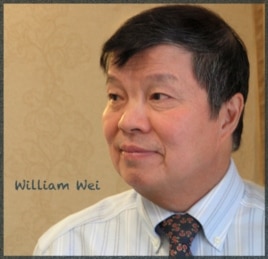
William Wei
William Wei
William Wei teaches history at the University of Colorado in Boulder. He says Chinese immigrants were not treated well. They had to live together in poor neighborhoods, or do hard work in laundries and restaurants that did not pay very much.

Mr. Wei says the American public did not believe Chinese immigrants could ever be part of their society.

In fact, in 1882 the US Congress approved and the president signed the Chinese Exclusion Act. The law barred Chinese people from moving to the United States and becoming citizens. It was the first and only US law to ban a specific ethnic group.

The US government cancelled the ban during the 1940s after China became an American ally in World War II. Yet the government limited the number of Chinese migrants to just 105 per year. Finally, in 1965, the government ended the system restricting Chinese immigration.
 
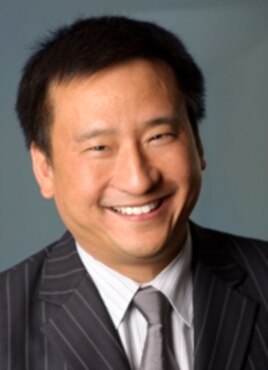
Frank Wu
Frank Wu
​Frank H. Wu leads the Hastings College of the Law at the University of California. He says the history of Chinese immigrants in the United States helps explain why so many Chinese Americans are well-educated.

“The Chinese people who were able to immigrate were talented, they were students on scholarships, they were people who had great potential,” he says.

Mr. Wu says many Chinese Americans are pleased the American public considers them smart, good citizens who fit well into the country.

But, he adds, even positive stereotypes about Chinese Americans cause problems.

Mr. Wu says the United States includes people of many races, and one race should not be considered better.

He says white Americans may also blame other minorities for not being as successful as the Chinese.

“Some Americans say: ‘Look what we did to the Chinese. We discriminated against them, committed violence against them, excluded them from our country, yet they still have achieved. Therefore, if your minority has not succeeded in our land of opportunity, it is clearly your fault.’”

Mr. Wu says such thinking leads people to think victims are responsible for their abuse.

Charles Gallagher of LaSalle University added that all Chinese Americans are not good in school. One who does not succeed as easily may feel he or she does not really belong.

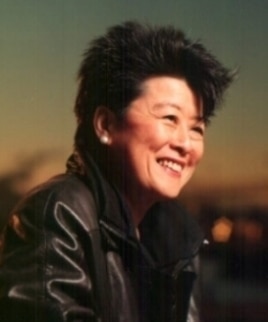
Helen Zia
Helen Zia
Helen Zia is a Chinese American writer. She says US policy makers may believe the Chinese are successful, so the government does not have to help those who are poor or suffering.

And, Ms. Zia says, some people may believe Chinese Americans are too successful. 

“If we are perceived as being able to endure everything,” she says, “it also means that we can be perceived as being able to take over everything.” Read more at VOA.

Sunday, October 12, 2014

Apple Watch Makes Its Fashion Magazine Debut In China

Liu Wen Wearing the device
The Apple Watch will makes its media debut in November, gracing the cover of Vogue China. Liu Wen, a 26-year old supermodel, will sport the Apple Watch Edition, one of three models for the device Apple unveiled in September.

"Vogue China is following in the Vogue tradition of moving with the times, giving our readers the first glimpse of a pioneering piece of technology that also doubles as a highly covetable fashion accessory," Angelica Cheung, the magazine's editorial director, said in a statement.

A spokeswoman for Vogue China said putting Apple Watch on its cover was the magazine's idea. "The styling of the Apple Watch on the cover of Vogue China's November issue is an editorial decision, coming about in the same way the editor and team select and style pieces on all their covers," the spokeswoman said in an email.

Still, cooperating with the request -- the watch won't be available to the public until sometime next year -- signals the Cupertino, Calif. company is looking to cement its brand both in fashion and in the wider world.

For its event introducing the watch, Apple invited press from multiple fashion publications, a first for the company. After the event, Apple hired a top marketer from Gap, adding to its roster of recently acquired executives from fashion and retail. Apple's global retail chief, Angela Ahrendts, who left her position as CEO of Burberry in 2013, is focusing intently on expansion in international markets.
China, in particular, has been an increasing priority for Apple. The nation's slice of the company's revenue expanded from 2%, in 2009, to 16% last quarter.

Pre-orders for the iPhone 6 and iPhone 6 Plus -- larger smartphones, which have sold more successfully across Asia -- began on Friday morning in China. Within six hours, one million orders were taken by the three largest carriers, according to Fortune.

Apple did not return requests for comment.

The Vogue China cover was styled by Karl Templer and photographed by David Sims, both veteran Vogue contributors. Apple Watch Edition, the product worn on the cover, sports an 18-carat gold casing. The company also released a basic version of the device and an activity-oriented version, Apple Watch Sport. Apple has not commented on the pricing of the products, which will begin shipping in 2015 at an unspecified time.

Read more at Adage.com

Saturday, September 27, 2014

The Simpsons Now In Mandarin

“Woo hoo! Now we can reveal Springfield is actually in Guangdong.” That was how The Simpsons’ executive producer greeted news that the hit US show will air for the first time in China. The long-running hit starring the doughnut and beer obsessed Homer Simpson and his irreverent son Bart will be streamed online in China by Sohu Video, reports Variety. The latest season (there are 26 in total, in case you wondered) will be shown with subtitles in Mandarin, in a deal done with the show’s maker Fox.

“The introduction of The Simpsons, a household name in the US, will further enrich our users’ choice of the best American content when they come to our platform. This deal once again demonstrated our commitment in bringing the best experience to our users and tireless efforts to enhance our competitive edge in the industry,” said Charles Zhang, Sohu’s boss. The timing of the deal will strike some as noteworthy, given Beijing has recently banned some US shows from airing on online video streaming platforms . (Week in China)

Tuesday, September 23, 2014

Going Gaga Over Alibaba

What do Midland Railway and IBM have in common? The answer is they were the largest companies by market capitalisation in the UK and the US when each country reached the apex of its economic dominance in 1914 and 1967 respectively.

Both firms were emblematic of their era. Midland Railway was the biggest coal hauler in the country that had ushered in the industrial revolution. IBM was the leading hardware manufacturer at the dawn of the computer age when American consumers were the envy of the world.But the two examples also highlight how fleeting global hegemony can be.

Few now remember the railway firm, which lost its independence after the First World War thanks to the Railways Act. IBM may still be a colossus, but it no longer ranks in the top 20 global companies in market cap terms.

In fact, when the New York Stock Exchange opens later today, IBM is also likely to be eclipsed by Alibaba, the company now best symbolising China’s ascendance on the world stage. The e-commerce giant priced its IPO in New York last night at $68 per share to the thunderous applause of global investors.

How gigantic is the deal?
Should the greenshoe be exercised, Alibaba’s flotation will raise $25 billion and rank as the world’s largest, beating Agricultural Bank of China’s $22.1 billion debut in 2010. When founder Jack Ma rings the opening bell, Alibaba’s market cap will be $177.5 billion, similar in size to Samsung Electronics. However, the stock price is expected to be much higher by closing on its first day, fuelled by newspaper hype and insistent demand from investors. Enthusiasm for the deal has been overwhelming, notwithstanding the fact that many investors have placed inflated orders to try to get some kind of allocation. The frustrated purchasing power of unallocated institutions, combined with the mass of retail investors who were unable to get into the IPO at all, could easily push the stock up into the stratosphere over the coming few days.
...
How is it likely to perform?
What happens to Alibaba after the initial fanfare dies down depends on what investors believe about its prospects for growth. Shareholders are unlikely to reap the same upside as investors in rivals Tencent and Baidu, which both listed a decade ago when they were less than five years old. Tencent has risen 150-fold since its June 2004 IPO, for example.

Alibaba is now 15 years old, so can we expect similar growth? There are numerous jumbo IPOs of companies with relatively mature business models which have still done well for investors. The most famous is Visa, which listed in March 2008 and still ranks as the largest IPO on record by a US firm. It rose 28% on its first day of trading and has quintupled since then.
...
A century of upside?
Jack Ma has no such qualms about Alibaba’s future. In the company’s pre-roadshow filing, he wrote a letter to prospective investors explaining how the company is only at the beginning of a 102-year journey, that will span three separate centuries from its inception in 1999.

Alibaba is not a mature business, its management says. Rather, its digital ecosystem will disrupt and transform all that it touches to the benefit of its Chinese customers and, increasingly, its global ones too.

A few years ago, Alibaba identified three pillar industries. In many respects it has only made inroads into the first one – e-commerce.
...
And outside China?
For many Chinese companies, their hallmark of success comes from going global. Alibaba has not really spent too much energy overseas yet, although it has made a number of smaller acquisitions. This is likely to change.

As Jack Ma put it in his recent investor letter: “In the past decade, we measured ourselves by how much we changed China. In the future, we will be judged by how much progress we bring to the world.”

Sohu Finance says one upshot of the IPO is the way it is shaping new perceptions of China’s internet firms. It notes that past listings tended to reinforce the view on Wall Street that China’s online giants were copycats of business models born in Silicon Valley. Thus Baidu was referred to as China’s Google, Renren as China’s Facebook and Sina Weibo as China’s Twitter.

“Of course, there are still many people calling Alibaba China’s Amazon,” writes Sohu Finance. “But this time there are a growing number of Wall Street investors realising that this title is not accurate.” In fact, many have given up trying to apply a simile to Ma’s creation.
 ...
Oh yes, so why didn’t it list domestically?
Some wonder why Alibaba didn’t list in Shanghai – where enthusiasm for buying into the IPO would have been intense.

But Doug Young, who writes the Young China Biz blog, says that this was never a realistic option since Alibaba is incorporated outside China (a common practice among Chinese venture-backed tech firms).

“Such overseas incorporation has not only barred internet giants like Tencent and Baidu from listing in China, but has also locked out other major names like China Mobile and Lenovo, which are also technically incorporated outside China for historical reasons,” he notes. Read more detalied report at Week in China.